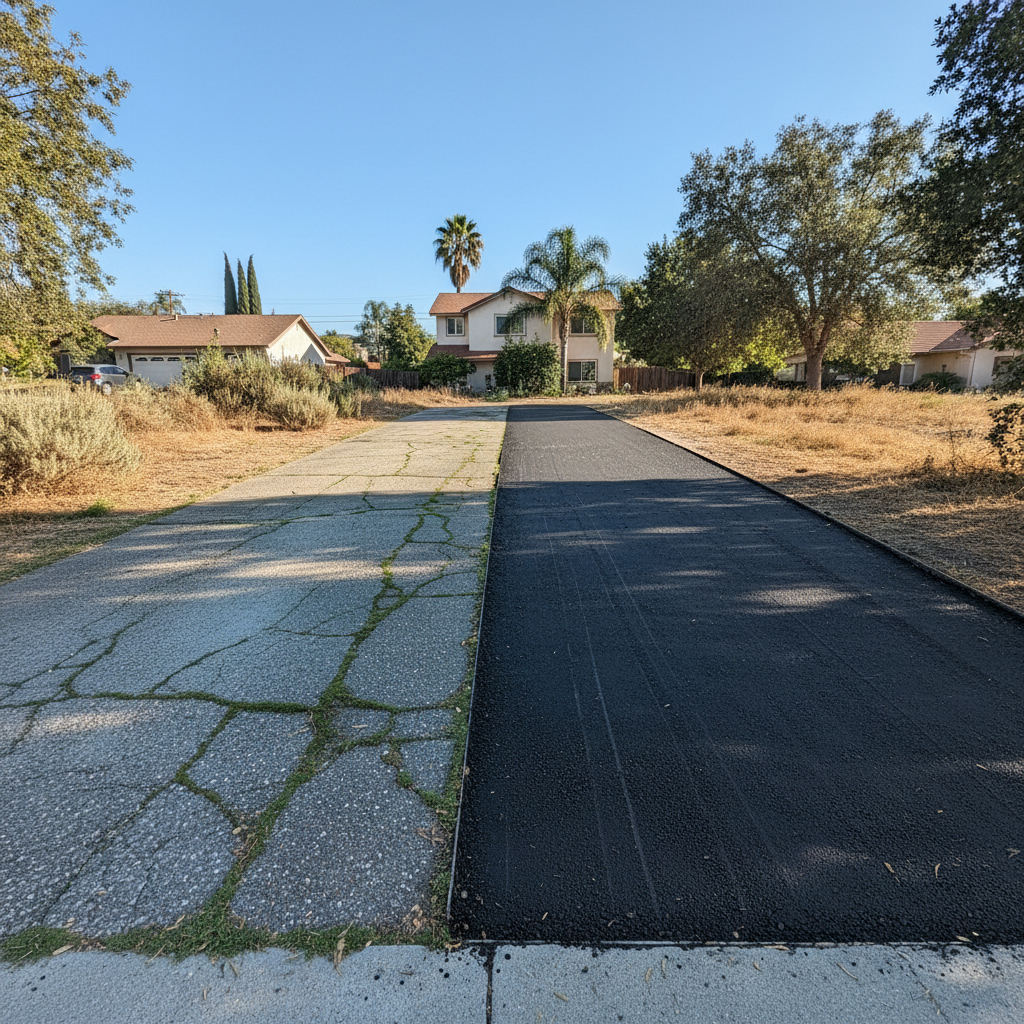
Alright, let's talk about asphalt milling. If you're thinking about getting your driveway or parking area redone, you've probably heard this term thrown around a bit. But what does it actually mean? And, more importantly, what are your options? As a contractor who's been doing this work in Van Nuys for years, I see a lot of folks get confused about the difference between a full-depth mill and a top-layer mill. Let me clear it up for you.
What's Milling Anyway?
Before we dive into the two types, let's just quickly define milling. It's basically like shaving off the top layer of your existing asphalt. We use a special machine with a rotating drum that has a bunch of cutting teeth. This machine grinds up the old pavement, creating a fresh, even surface for new asphalt to be laid down. You usually do this when your asphalt is cracked, rutted, or just generally falling apart, but the base underneath still feels solid. It's a way to fix the surface without tearing out everything.
Option 1: Top-Layer Milling (The Skim Coat)
This is what most people picture when they hear 'milling.' With top-layer milling, we're just taking off the very top layer of your asphalt — usually anywhere from 1 to 3 inches. Think of it like giving your driveway a really good haircut. We're getting rid of those surface imperfections, the alligator cracking, the shallow potholes, and those ugly oil stains that just won't come out. Then, we put down a fresh layer of new asphalt right on top.
Pros of Top-Layer Milling:
- Cost: It's generally less expensive than full-depth. You're removing less material, and often we use less new asphalt to replace it.
- Speed: The job usually gets done quicker. Less material to remove means less time on site for the crew.
- Less Disruption: Since we're not digging deep, there's less impact on utilities, drainage, or any surrounding landscaping you might have.
- Appearance: You get a brand-new, smooth surface that looks great.
Cons of Top-Layer Milling:
- Durability: If your underlying asphalt has serious structural issues – like deep cracks that go all the way through, or a failing base – top-layer milling won't fix those. It's a surface repair, plain and simple.
- Limited Life: If the problems are deeper, the new top layer might start showing cracks again sooner than you'd like because the issues underneath are still there. It's like putting a fresh coat of paint on a rusty car; it looks good for a bit, but the rust eventually comes back.
Option 2: Full-Depth Milling (The Deep Clean)
Full-depth milling is a more aggressive approach. We're not just skimming the top here; we're going down much deeper, sometimes removing the entire asphalt layer right down to the base material. This is usually done when the asphalt is severely deteriorated, has major structural failures, or when the base itself needs to be re-graded or stabilized.
Pros of Full-Depth Milling:
- Durability: This is the big one. By removing all the old asphalt and potentially addressing base issues, you're building a much stronger, more stable pavement. It's a long-term solution, really.
- Structural Improvement: This lets us fix those underlying problems that keep causing repeated failures. It's crucial for heavy-traffic areas or driveways with significant settlement.
- Longevity: A properly done full-depth mill and overlay will last significantly longer than a top-layer job if the existing pavement has deep issues.
Cons of Full-Depth Milling:
- Cost: It's more expensive, no two ways about it. You're removing more material, using more new asphalt, and the whole process takes longer.
- Time: The project will take more time, meaning your driveway or parking area will be out of commission for longer.
- More Disruptive: Going full-depth can mean more noise, more equipment, and a bigger impact on the surrounding area. You might need to adjust grades or deal with utility covers, too.
Which One Should You Choose for Your Van Nuys Property?
Here's the honest truth: it really depends on the condition of your existing asphalt. For many homeowners in Van Nuys, especially those in older neighborhoods like Lake Balboa where the ground can settle a bit over decades, a top-layer mill is often sufficient if the base is still good. If you've just got surface cracking, some minor rutting from years of driving over the same spot, or general wear and tear, a top-layer mill will give you a beautiful, smooth, and durable new surface that'll last you a good 10-15 years, sometimes more, especially with our mild Southern California weather.
However, if your driveway looks like a jigsaw puzzle, with cracks running deep and wide, or if you've got standing water issues and significant dips, then you're probably looking at a full-depth mill. That's when the problems are structural, and just shaving the top won't cut it. You'd be wasting your money on a temporary fix, wouldn't you?
My recommendation? Get a professional assessment. I can come out, take a look at your specific situation, and give you an honest opinion. I'll tell you if a top-layer mill is all you need, or if you'd be better off investing in a full-depth solution for long-term durability. At All Things Asphalt Company, we're all about doing the job right the first time, so you don't have to call us back in a few years for the same problem.
Don't guess. Let's figure out the best approach for your asphalt, so you get the most bang for your buck and a driveway that looks great and lasts.