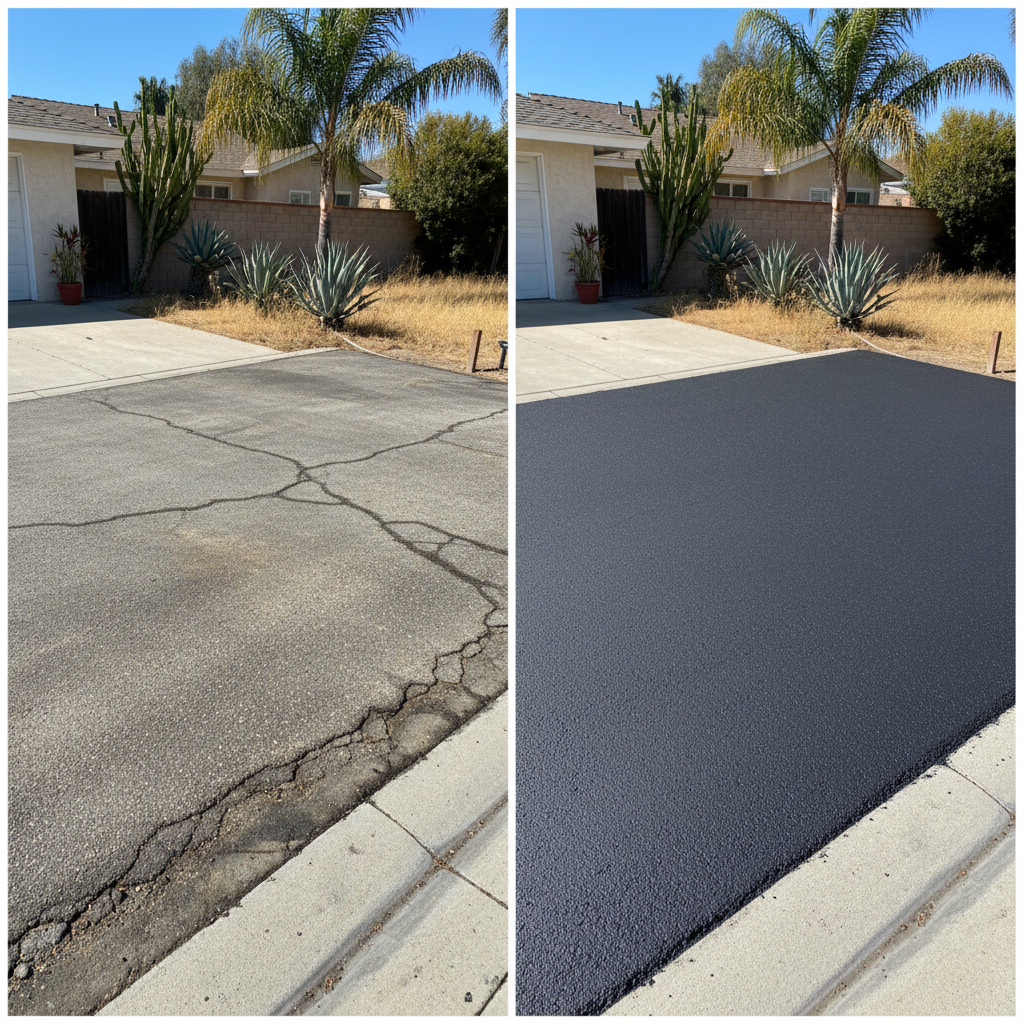
Alright, let's talk driveways. You've got cracks, potholes, or maybe you're just tired of looking at that old concrete slab. You're thinking asphalt, and that's a smart move for a lot of reasons. But then the question comes up: do I get a whole new driveway, or can I just put a fresh layer over what's already there? This is where 'full-depth' versus 'overlay' comes in, and knowing the difference can save you a lot of headache and cash.
What's a Full-Depth Asphalt Driveway?
When I talk about a full-depth asphalt driveway, I mean we're starting from scratch. We rip out whatever's there – old concrete, busted asphalt, dirt, whatever. Then we prep the subgrade, which is the dirt underneath. This usually involves grading it properly, compacting it, and sometimes adding a layer of aggregate base rock. After that, we lay down multiple layers of asphalt, compacting each one. You're getting a brand-new foundation and a brand-new surface.
And an Asphalt Overlay?
An overlay, sometimes called resurfacing, is exactly what it sounds like: we're putting a new layer of asphalt over your existing pavement. This isn't just a quick patch job; it's a legitimate way to extend the life and improve the look of a driveway that's still got a decent base. Before we do an overlay, we'll fix any major cracks or potholes in the old pavement, clean it up, and often apply a tack coat, which is like glue to help the new layer stick. Then we lay down a fresh layer of asphalt, usually 1.5 to 2 inches thick, and compact it.
Cost: Where Your Money Goes
No surprise here: a full-depth installation is almost always going to cost more upfront. You're paying for demolition, more material, and more labor for all that groundwork. It's a bigger project. An overlay, on the other hand, is generally more budget-friendly because you're reusing your existing base. You're saving on demo and a lot of the initial prep work. For homeowners in Van Nuys, especially with some of the older homes in areas like Lake Balboa, you might be looking at a concrete driveway that's seen better days. If that concrete is mostly sound, an asphalt overlay can be a really cost-effective way to get a smooth, new surface.
Durability and Lifespan
A full-depth asphalt driveway, when done right, is built to last. We're talking 20-30 years, maybe more, especially if you keep up with maintenance. It's got a solid, engineered foundation designed to handle the load and the elements. An overlay's lifespan depends heavily on the condition of the pavement underneath. If the existing driveway has severe structural issues – widespread alligator cracking, major depressions, or a failing base – an overlay is just putting a band-aid on a broken leg. It might look good for a year or two, but those underlying problems will telegraph right through the new surface. If the existing pavement is generally stable with mostly surface cracks, an overlay can give you another 10-15 years of good service.
Maintenance Needs
Both options benefit from regular maintenance. That means sealing it every few years, patching small cracks as they appear, and keeping it clean. For a full-depth driveway, this maintenance helps it reach its maximum lifespan. For an overlay, staying on top of maintenance is even more critical. You want to protect that new surface and prevent water from getting into the old layers underneath, which can accelerate deterioration.
Appearance: What You'll See
A brand-new full-depth asphalt driveway looks pristine. It's perfectly smooth, uniformly black, and has crisp edges. It really boosts curb appeal. An overlay also looks great initially – you get that same smooth, dark surface. The main difference is that if the existing pavement had significant variations in height or slope, those might still be subtly present, though a good contractor will do their best to level things out. You also won't have the option to change the footprint of your driveway with an overlay; you're stuck with the current shape.
My Recommendation for Van Nuys Homeowners
Here's the deal: for most folks in Van Nuys, especially with our hot summers and occasional heavy rains that can really stress pavement, I lean towards a full-depth installation if your existing driveway is truly shot. If you've got standing water, major potholes, or cracks that are wider than your thumb and running everywhere, an overlay isn't going to cut it long-term. You'll be throwing good money after bad.
However, if your driveway is mostly solid, maybe just faded, showing some minor cracking, or has a few small, isolated potholes, an overlay is a fantastic option. It's quicker, less disruptive, and significantly more affordable. It's a great way to refresh your property without breaking the bank. We've done plenty of overlays for folks in the Valley where the old concrete was still a decent base, but they wanted the look and feel of asphalt.
The best way to figure out what's right for you? Get a pro out there. We'll take a look at your existing driveway, assess its condition, and give you an honest recommendation. At All Things Asphalt Company, we're not just trying to sell you the most expensive option; we want to give you the best value and a driveway that lasts. We'll walk you through the pros and cons specific to your situation, so you can make an informed decision.